There is a good chance a crow somewhere knows exactly who you are.
It sounds far-fetched, but it is one of the better-documented findings in animal behaviour. A researcher called John Marzluff, at the University of Washington, wanted to know whether crows could tell one person from another. So he and his team pulled on rubber masks, caught and banded a few wild crows (a brief fright for the birds, but no harm done), and let them go.
What happened next is the interesting part. Whenever someone wearing that same mask walked through the area afterwards, the crows scolded them and mobbed them, diving and calling. People in different masks were left alone. The birds were not reacting to a uniform or a van. They had learned a face, and filed it under trouble.
Then it got stranger. Crows that had never been caught, that had only watched the fuss from a distance, started scolding the mask too. The information was passing through the population, parent to chick and neighbour to neighbour. Years later, long after the original birds had gone, the mask was still being met with abuse. The crows had built up a piece of local folklore about a dangerous human, and they were keeping it alive.
Once you know crows can do that, the rest of their reputation starts to make sense.
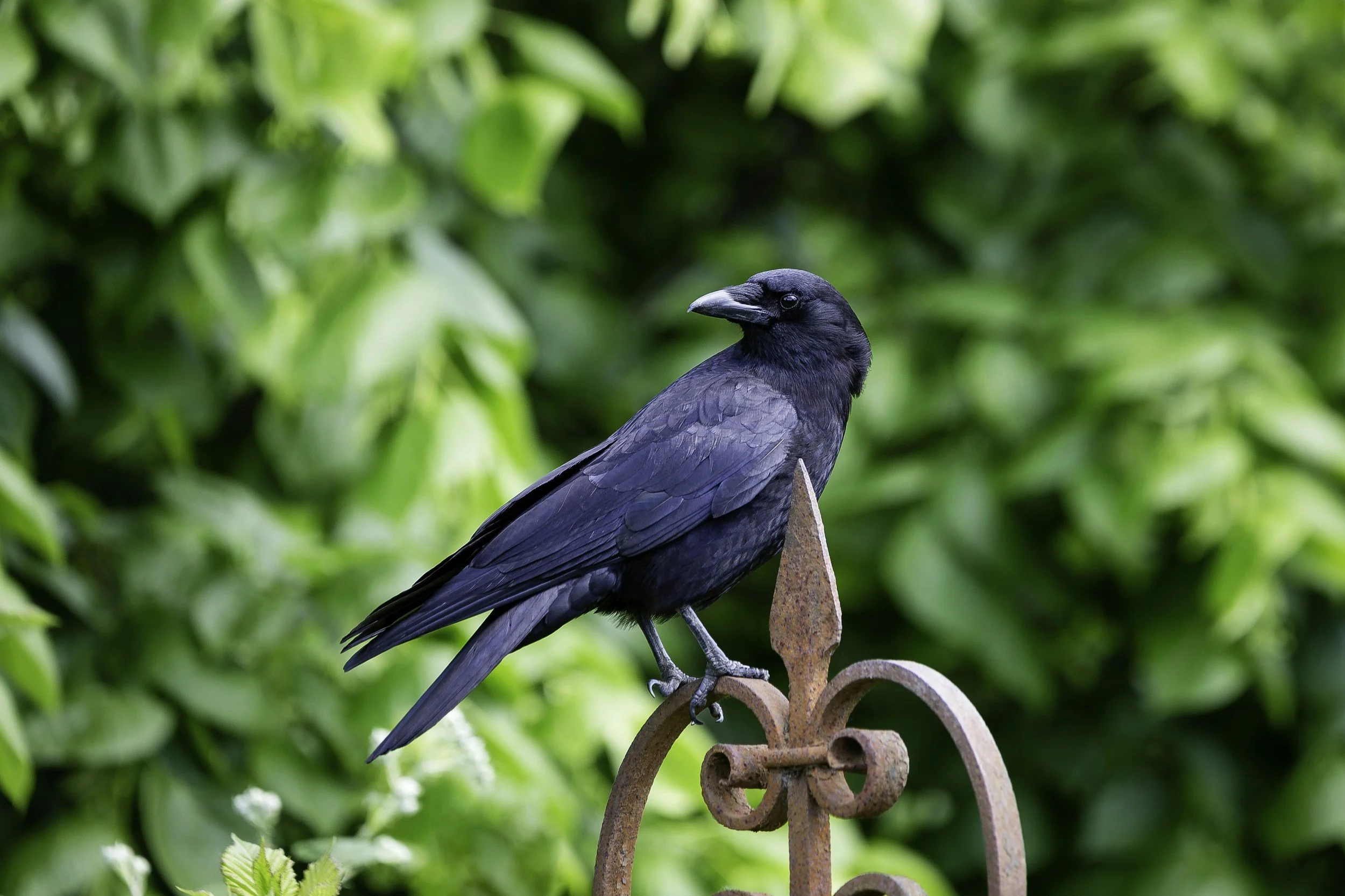
"If men had wings and bore black feathers, few of them would be clever enough to be crows."
— Henry Ward Beecher
So the next time a crow watches you from a fence post, head tilted, take it as a small compliment. It is paying attention. It may already have an opinion about you, and it may be passing that opinion on.
You do not need a forest or a special trip to see any of this. Crows live alongside us almost everywhere people do. Spend a week noticing the ones near you, the routes they take, the way they react when you stop and look back at them, and you will start to see a watchful, calculating mind that has been hiding in plain sight the whole time.
