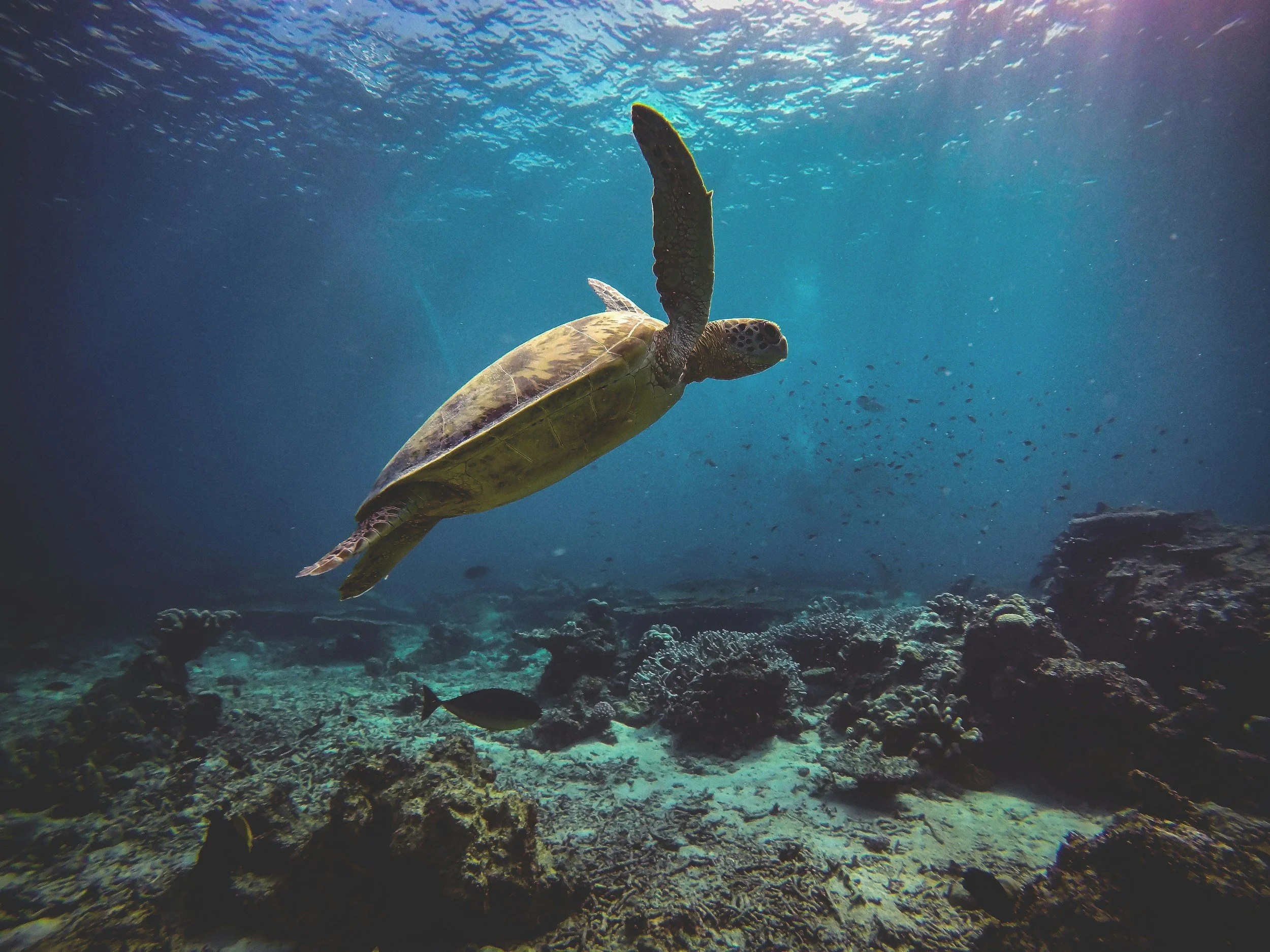
For most of my life, the green sea turtle has been a symbol of everything we were losing. Slow, ancient, gentle — and disappearing. So it still feels strange, in the best way, to write this down: the green sea turtle is no longer endangered.
In December 2024, scientists reassessed the species for the IUCN Red List — the global stocktake of how the world's wildlife is faring — and found something they almost never get to report. The green turtle hadn't just stabilised. It had recovered so well that it skipped straight past the in-between categories and was moved from "Endangered" all the way to "Least Concern." Globally, there are now more than a quarter more green turtles than there were in the 1970s. For a creature that takes decades to reach adulthood, that is an extraordinary turnaround.
"It underlines that marine conservation can work, there is hope, and we should rightly celebrate it."
— Professor Brendan Godley, turtle expert, University of Exeter
What makes this worth slowing down for is why it happened. Nothing about it was an accident. Green turtles were nearly emptied out of the world's oceans — hunted for their meat and shells, their eggs dug from the sand, and countless adults drowned in fishing nets they were never meant to be in. The recovery came from people deciding, slowly and stubbornly and across many countries, to undo each of those harms. Nesting beaches were guarded so females could lay in peace. The trade in shells and eggs was reined in. Fishing nets were fitted with simple escape hatches — "turtle excluder devices" — that let a trapped turtle find its way out. None of it was glamorous. All of it added up.
I want to be honest with you, though, because conservation rarely fits on a postcard. "Least Concern" is the global picture, and the global picture hides smaller, harder local ones. Some populations — in the eastern Pacific, the Mediterranean, parts of the South Pacific — are still struggling and still need protecting. A turtle hatching on one beach faces a very different future from one hatching on another. The headline is genuinely good news; it just isn't the whole story, and the work is far from finished.
But here is the thing I keep coming back to. We are so used to nature stories that end badly that we have almost forgotten they don't have to. The green turtle is proof, swimming around out there in the warm shallows, that when we choose to give a species room and time, it can answer. Decisions made decades ago — by people who would never live to see the result — are why there are more turtles in the sea today than when they started.
That feels like something worth noticing. Not just the turtle, but what the turtle tells us: that paying attention, and then acting on it, works.
